What you need
Login access to your own Google Business Profile. Nothing else, no software, no card.
What it costs
Nothing to read. A few hours a month to do, spread across the quarter.
Who it is for
Local businesses that get customers from Google and are not currently in the top three.
Bookmark this before you start. This is a 90 day plan. You will want it again at day 14, day 45 and day 76, and the sections are written so you can jump straight back to the one you are on.
PART ONE
What the top three actually is, and why it is three
Search for any local service on your phone. Above the ordinary blue links, you get a small map with exactly three businesses listed under it.
Three. Not ten. Google chooses three and shows a button that says more places, which almost nobody taps.
The reason is the phone in your hand. On a small screen there is room for about three results before somebody has to scroll, and Google would rather be confident about three than vague about ten. So the entire local search market gets compressed into three slots per search.
That block is what the industry calls the Map Pack. Somebody looking for an emergency plumber at nine at night is not comparing twelve options. They are calling one of the three in front of them, and if that one answers, the search is over.
How Google picks the three
Google is unusually open about this. Local results are ranked on three things, and everything in the rest of this guide is a way of moving one of them.
Relevance
Do you match what was typed? Comes from your category, your listed services and your website.
Fixable in an hour
Distance
How far you are from whoever is searching, measured from your pin.
You cannot change this
Prominence
How established you look everywhere else. Reviews, links, mentions, your site.
The 90 day project
The idea the rest of this hangs on
Think of every business as broadcasting a signal. Distance weakens it as it travels. Prominence is how much power you are broadcasting with.
A weak business that happens to be nearby beats you locally. Turn your power up far enough and you start winning even against businesses sitting closer to the searcher than you are.
You are not beating distance. You are buying enough prominence that Google is willing to overlook it.
One more thing worth knowing now rather than in six weeks. If you are a service area business with no shopfront, hiding your address does not remove distance from the equation. Google still measures from a pin. Setting a huge service area tells Google where you will travel. It does not tell Google to rank you there.
PART TWO
Which search are you actually trying to win?
Everything from here on depends on picking one search to aim at. Not ten. One, to start with.
This is the step almost every guide skips, and it is the reason people do months of work and see nothing. They optimise beautifully for a search nobody profitable is typing.
Start with what Google already knows about you
Your Google Business Profile quietly records the searches people typed before they found your listing. Real queries, from real customers, for your actual business. Most owners have never opened it.
Open your profile, find the performance or insights section, and look for the list of search terms. Give it a minute. Some of what is in there will surprise you, and it beats any keyword tool because it is demand that already reached you.
Then let Google finish your sentence
Open Google Maps, start typing your service, and stop. The suggestions that drop down are real searches, ordered roughly by how often people make them. It is a free keyword tool that almost nobody uses deliberately.
Now throw most of them away
You will end up with a long list. The job is picking one to start with, and the filter is not search volume. It is these three questions.
Does this search bring a job you actually want?
Ranking for the cheap job you resent is worse than not ranking.
Is this person ready to buy, or just reading?
Bathroom renovation ideas is a browser. Bathroom renovation contractor near me has a budget.
Could you say yes to it today?
If you are three weeks booked and it says emergency, you will burn every lead it sends.
The trap nearly every trade falls into
You will be tempted to use your own vocabulary. Customers do not. They search for blocked drain, not hydro jetting. Chest pain, not cardiology consult. Leaking roof, not membrane failure.
Write down the words customers actually say on the phone, and use those. If autocomplete does not suggest your phrase, that is Google telling you nobody types it.
Pick one to lead with. You are not abandoning the others, and the work in this guide lifts you for related searches too. But you need one to measure against, or you will never know whether the quarter worked.
PART THREE
Is 90 days realistic for you?
Read this before the rest. For some of you the answer is no.
The honest answer depends almost entirely on your industry, and the difference between industries is enormous. Two businesses in the same city, doing everything in this guide equally well, can be a quarter apart or two years apart.
Here is a way to see it without any tools.
Reviews are not what gets you ranked. But they are the one part of prominence you can count from the outside, so they work as a rough gauge of how much of a head start the current leaders have.
We pulled the top three in four Toronto industries. Same city, same week.
Combined Google reviews held by the current top three, August 2026.
A contractor competing against 296 is in a completely different fight from a plumber competing against 4,055. Thirteen times the head start, same city, same method.
Do this now · two minutes
Search your main service plus your city in Google Maps. Look at the three businesses at the top and add up their review counts.
Under about 500 between them. Ninety days is realistic. This guide is written for you.
Between 500 and 1,500. Ninety days gets you close and often inside. Expect to keep going into a second quarter.
Over 1,500. Be honest with yourself. Ninety days will not take the city term. Part Ten is where you should go instead, and it is a better use of your quarter.
Nobody else will tell you that third one, because it costs them a sale. But spending a quarter on an unwinnable fight is how people conclude that this whole thing does not work.
One caution on the number. A business with 900 reviews collected over eleven years is not the same opponent as one with 900 collected in eighteen months. Glance at the dates on their recent reviews. Somebody actively collecting is still accelerating. Somebody coasting on an old pile is beatable.
PART FOUR · DAYS 1 TO 14
Fix the profile first
Your Google Business Profile is the fastest moving thing you control. Google re-reads it continuously rather than waiting to crawl your website, so changes here can show up in days rather than months.
Most businesses fill in about a third of it and stop. That is the single most common reason a perfectly good local business sits at number twelve while a worse one sits at number two.
Start with one field, on its own
Your primary category is the strongest single signal you control. It decides which searches you are eligible to appear in at all. Get it wrong and nothing else you do matters much, because you are competing in the wrong race.
Almost everyone makes the same mistake: they pick the broad one, because broad feels safer and seems to cover more searches. It does the opposite. It drops you into a bigger, vaguer pile where Google is less certain what you actually do.
Same business, three possible categories
How to find the right one in five minutes
Search your money keyword in Google Maps and look at the small grey line under each of the top three business names. That line is their primary category. If all three share one and yours is different, you have just found your problem.
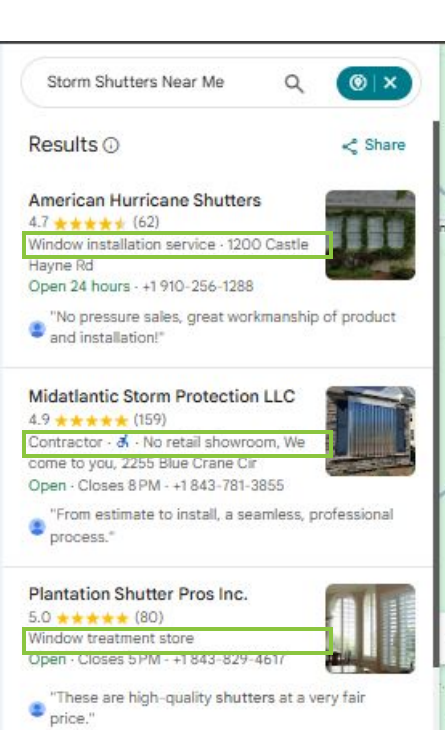
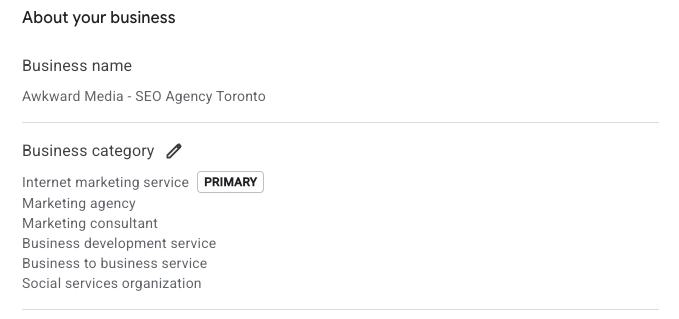
Then work through the rest, in this order
- 1Secondary categories, only for work you genuinely do. Three accurate ones beat nine hopeful ones, because every category you add that you are not really known for makes Google slightly less sure about the ones you are.
- 2Every service listed separately, each with its own description. Write them the way a customer describes the problem, not the way your trade names the product. People search for blocked drain, not hydro jetting.
- 3Photos on a schedule. A few every week beats forty in one afternoon and then nothing for a year. A profile that gets updated looks like a business that is trading.
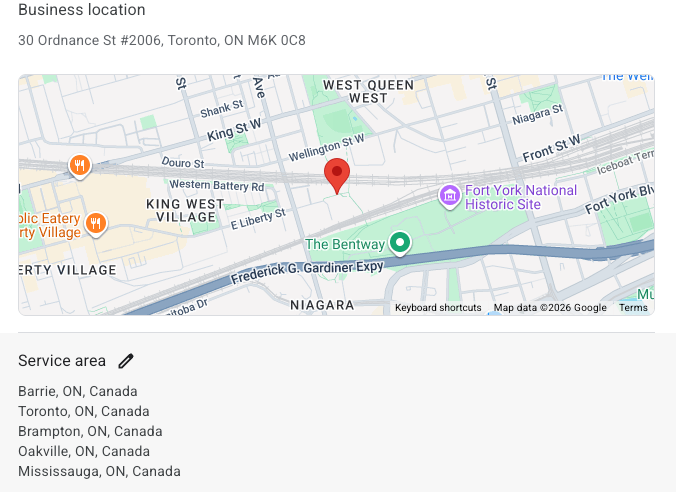
- 4Service areas named town by town, not a lazy circle on a map. Name the places you would genuinely drive to and be paid for.
- 5Questions and answers, seeded with the things customers actually ask you on the phone. You are allowed to ask and answer your own, and most businesses never do.
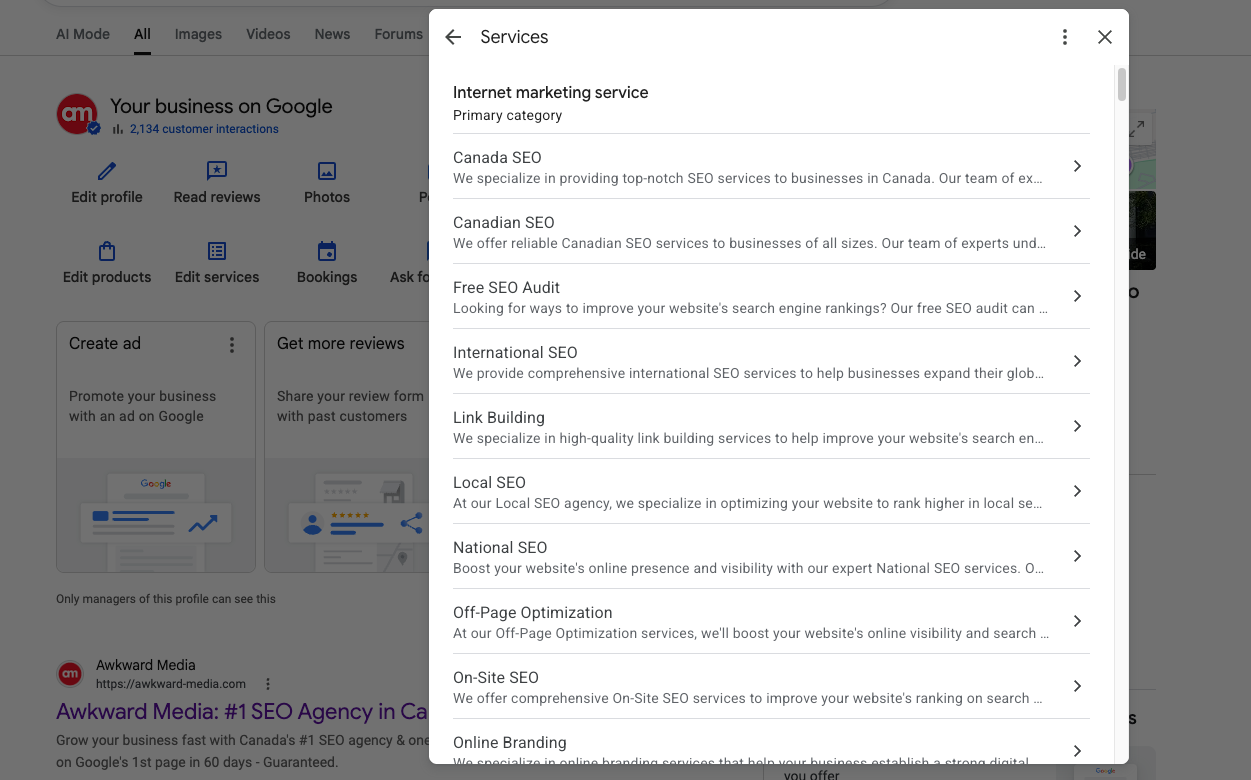
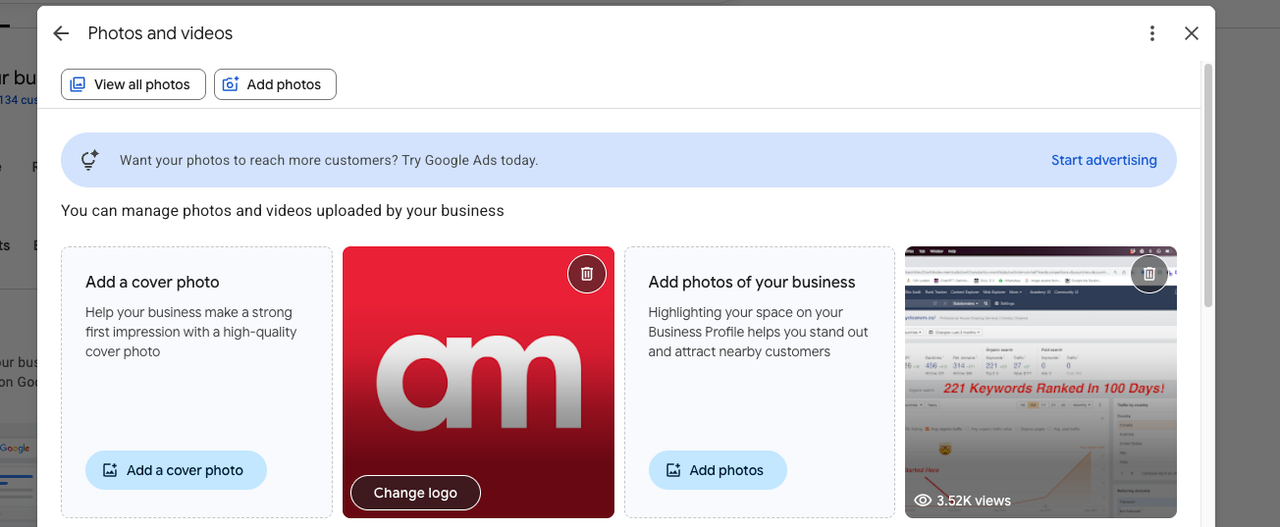
Two things not to do
Do not stuff keywords into your business name. It genuinely works for a while, which is why it is tempting. It also breaks Google's guidelines, your competitors can report it in about thirty seconds, and a suspension costs you far more than the gain.
Do not bother geotagging photos before uploading. Google strips location data from images on upload. Whole articles have been written about this and it does nothing.
What to expect: if the category was wrong and you fix it, movement can show inside two weeks. If nothing at all has moved by day 14, either the category is still not right, or somebody much stronger sits directly on top of you and the rest of the plan is what closes that.
PART FIVE · DAYS 15 TO 45
Prove you actually work there
Google needs a reason to believe you serve a place. A line on your website saying you cover the whole region is not a reason. Evidence is.
This is where almost everyone goes wrong, and they all go wrong in the same way. They take one page, swap the town name twenty times, and publish twenty pages. Google has recognised that pattern for well over a decade. It has a name, doorway pages, and it is explicitly against the guidelines.
Why this works when it is done properly
A real page about a place does two jobs at once. It connects you to that place in Google's eyes, and if it ranks in ordinary search it lifts how established you look overall, which feeds straight back into the map.
First, pick the right two towns
Not the biggest two. Not the two nearest. Ask three questions about each candidate.
Have you already done work there? If yes, you have photographs and a customer. If no, you are writing fiction and it will read like it.
Would you actually drive there for a normal job? Ranking somewhere you resent travelling to creates leads you quietly decline, which is worse than no leads.
Who currently holds the top three there? Search it. If it is the same national chains as your home town, park it. If it is a couple of small operators with thin profiles, that is your town.
Then build the page properly
What belongs on a page about a town
Common mistake
Publishing ten of these at once. You will not know which worked, and you will have spread thin content across your whole site. Build two. Prove they rank. Then build two more.
What to expect: four to twelve weeks for a new page to index and settle into a position. This is the slowest part of the plan, which is exactly why it starts on day 15 rather than day 60. You start it early and then leave it alone.
This is the step most owners run out of road on, and there is no shame in that. If two proper town pages are not going to get written, we build them.
PART SIX · DAYS 46 TO 75
Build the proof layer
How established you look is mostly not built on your own website. It is built out of what other people and other websites say about you, which is precisely why it is hard to fake and why Google leans on it so heavily.
What you say
Your own website
Necessary, and anyone can write it. On its own it proves very little.
What everyone else says
Reviews naming the town and the job
Links from things rooted in that town
Listings that all agree on your details
Prominence
The broadcast power from Part One. This is what buys you distance.
Reviews
Ask on the day you finish, while the customer still feels the relief of the problem being gone. Leave it a week and you are asking a person who has moved on.
Ask them to mention what you did and where. Review text is readable content, and it is one of the very few places a town name appears in a customer's own words rather than yours.
Something you can actually say
Glad that is sorted. If you have got a minute, a quick Google review really helps us. If you can mention it was the boiler and that you are in Barrie, even better, it helps people nearby find us.
Two sentences, said out loud, on the doorstep. It works far better than a text sent three days later, and it tells them what to write without putting words in their mouth.
Aim for a steady trickle rather than a burst. Thirty in one week looks bought, because usually it is. And reply to every single one, including the bad ones, in public and without arguing. A calm reply to an unfair review sells better than the five stars above it.
Local links
A link from something rooted in your town beats a stronger link from anywhere else, because local relevance is the whole point of the exercise.
The reliable sources, roughly in order of how easy they are to get: your chamber of commerce, suppliers and manufacturers who list approved installers, trade associations you already pay for, the youth team or event you sponsor, community associations, and the local paper.
Sponsorship is the most underrated of these. A few hundred dollars, a real relationship in the town, and a link nobody else in your category has bothered to get.
Listings that agree with each other
Your name, address and phone number should be identical everywhere they appear. Search your own business name, and separately your old phone number, and write down every listing you find. Old listings with dead details quietly undermine you, because they make Google less certain which version of you is true.
Common mistake
Only sending the review link to customers you already know are happy. It is against Google's policy, and it backfires with humans anyway. A perfect five across two hundred reviews reads as bought. A 4.7 with a couple of grumpy ones and calm replies reads as real.
What to expect: weeks to months, and it compounds. Slowest to start, longest tail, and by far the hardest thing for a competitor to copy.
PART SEVEN · DAYS 76 TO 90
Check whether it worked
Here is the trap. You search your own service, see yourself near the top, and conclude it worked.
But you searched from your own office, which is the one place on earth where your distance score is perfect. It tells you almost nothing about what a customer three towns over sees.
Do this instead · ten minutes, free
- 1Open Google Maps in a private or incognito window, so your own search history stops flattering you.
- 2Search your main service.
- 3Drag the map so a different part of your service area fills the screen, then click Search this area. The results reload for that spot rather than for where you are sitting.
- 4Do that from three places: your own address, somewhere in the middle of your area, and the far edge of it.
- 5Count down the list to find yourself, and write the number down with the date and the keyword.
Do this on day one as well as day 90. Two screenshots side by side is the only honest scoreboard there is.
Day 1
Day 90
One thing to know before you judge the result. Local results wobble between checks even when nothing has changed, sometimes by several positions on the same day. Read the overall picture and the direction of travel, never a single number on a single afternoon.
PART EIGHT
What not to spend your 90 days on
Knowing what to skip is worth as much as knowing what to do, because the quarter is short and most of these feel productive.
A brand new website
The most expensive way to avoid doing the actual work. A rebuild eats your whole quarter, and it usually moves local rankings very little on its own. If your current site loads and explains what you do, leave it and build the two town pages instead.
Buying reviews, or bulk directory submissions
Both are sold hard, both leave a footprint, and both are the kind of thing that gets a profile suspended. A suspension in month two costs you the entire quarter and then some.
Posting to your profile every day
Posts are fine. They are not a ranking strategy, and daily posting is a lot of effort for a small return. Weekly is plenty, and only if the other work is already done.
Chasing the single biggest keyword
The broadest term in your city is the one every competitor is also fighting for, and it is usually the least profitable per click. Specific searches convert better and are far easier to win.
Checking your rankings every morning
Results move around daily. Checking constantly turns normal noise into panic, and panic makes people change things before the last change has had time to work. Check at day 14, day 45 and day 90.
PART NINE
What this looked like for one of our clients
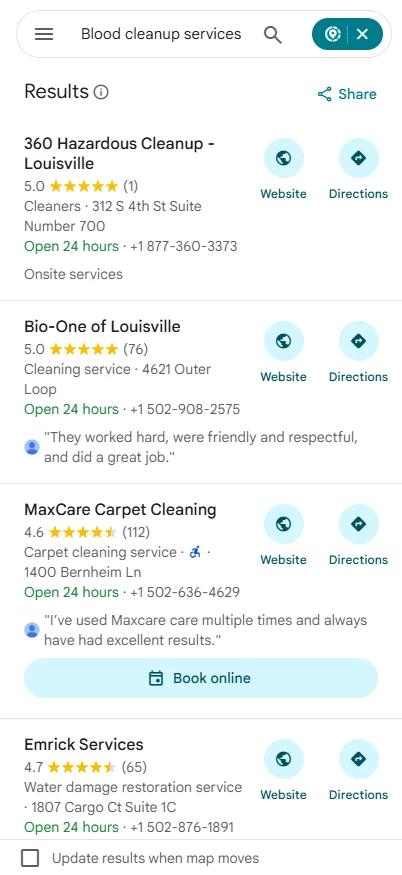
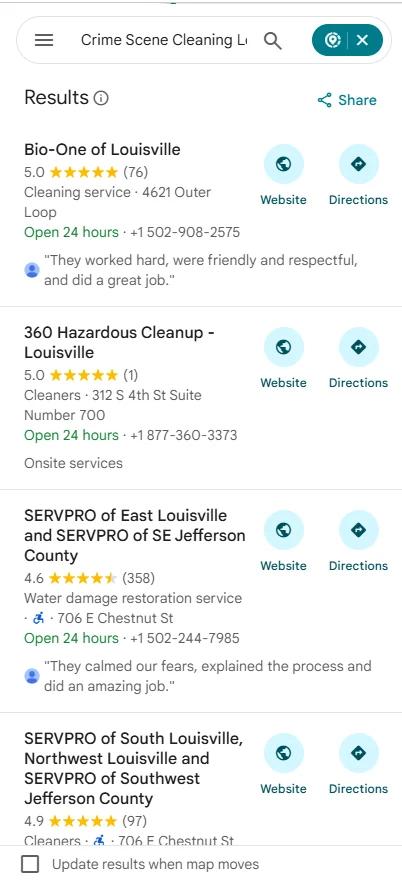
360 Hazardous Cleanup in Louisville, Kentucky. Crime scene and biohazard cleaning, which is about as competitive and as unglamorous as local search gets.
We ran exactly the process in this guide. Here is where they landed on eight of their money keywords, and where they started:
Eight keywords, all from outside the top thirty, all into the top three.
That took 20 days, not 90.
We are telling you 90 because 20 is not typical and we would rather set the expectation where it belongs. Same principles, longer runway. If it happens faster for you, good.
This is not the only one
We keep every campaign on one page, with the live result screenshots attached. Named clients, the exact position each keyword started and finished at, and the ones still climbing left in.
See all the case studiesPART TEN
If 90 days was not your answer
If Part Three told you the top three in your city is a longer fight, this section is the most valuable one on the page.
You do not have to win the city term to win more work. The city term is one search. Underneath it sit dozens of others where the established players are far weaker or simply absent.
Specific services rather than general ones. Emergency and same day searches. And above all, the neighbourhoods and surrounding towns, where being nearby counts for more and the giants have never bothered to build anything.
That is a different playbook, and we have written it out in full as well.
Read next
The 50-Mile Radius Playbook
How to widen the area you get called from, once you are ranking somewhere. Free, same format, no email needed.
Open the playbookTHE WHOLE PLAN ON ONE PAGE
Your 90 days
Pick the keyword, then baseline
Choose one search worth winning. Add up the top three's reviews. Run the three searches and write the numbers down.
The profile
Category first, on its own. Then services, photos, service areas, questions.
Two real town pages
Two. Not ten. With your own photos and a named job on each.
Reviews and local links
Aimed at the same two towns. Concentration is what makes it work.
Re-check and compare
Same three searches, same three places. Screenshots side by side.
Or we run the 90 days for you.
On a Search Engine Mastery Session we check your rankings live, tell you honestly whether the top three is reachable this quarter, and show you which part of this plan matters most for your situation. You keep the answer either way.
We take on a limited number of clients, and only ones we believe we can move. If that is not you, the guide above is genuinely everything we would do anyway.